Proper planting is essential for long-term plant health and success. Follow these guidelines to ensure a smooth transplant process and strong root development.
Container Plantings
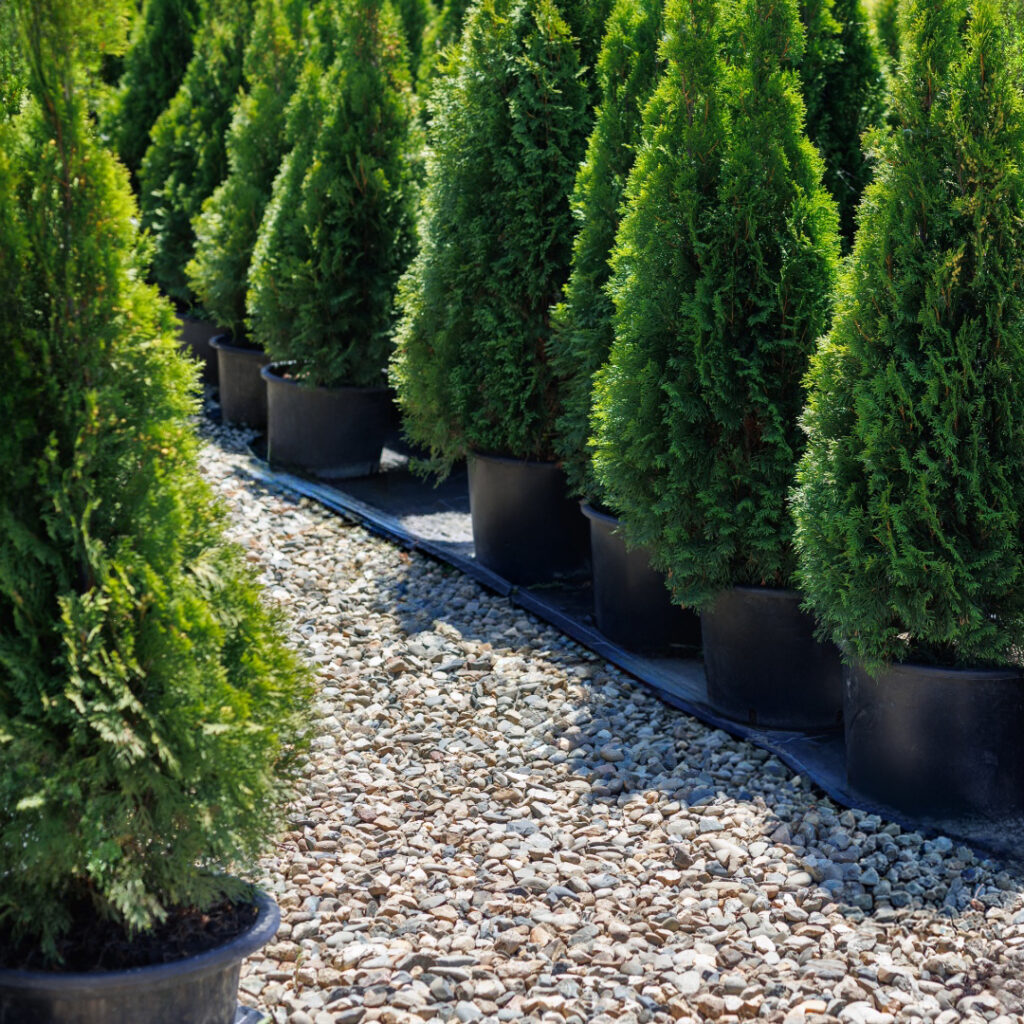
Remove the plant from its container and gently loosen the root ball.
Apply Bio-tone® directly to the roots at planting.
Balled & Burlapped (B&B) Plantings
Keep the root ball intact while handling.
Remove any twine or burlap tied around the trunk.
Do not remove natural burlap or the wire basket — they will decompose over time.
Exception: Synthetic or nylon burlap must be removed.
Apply Bio-tone® to both the root ball and the planting hole.
Soil Preparation & Planting Instructions
Clay Soil
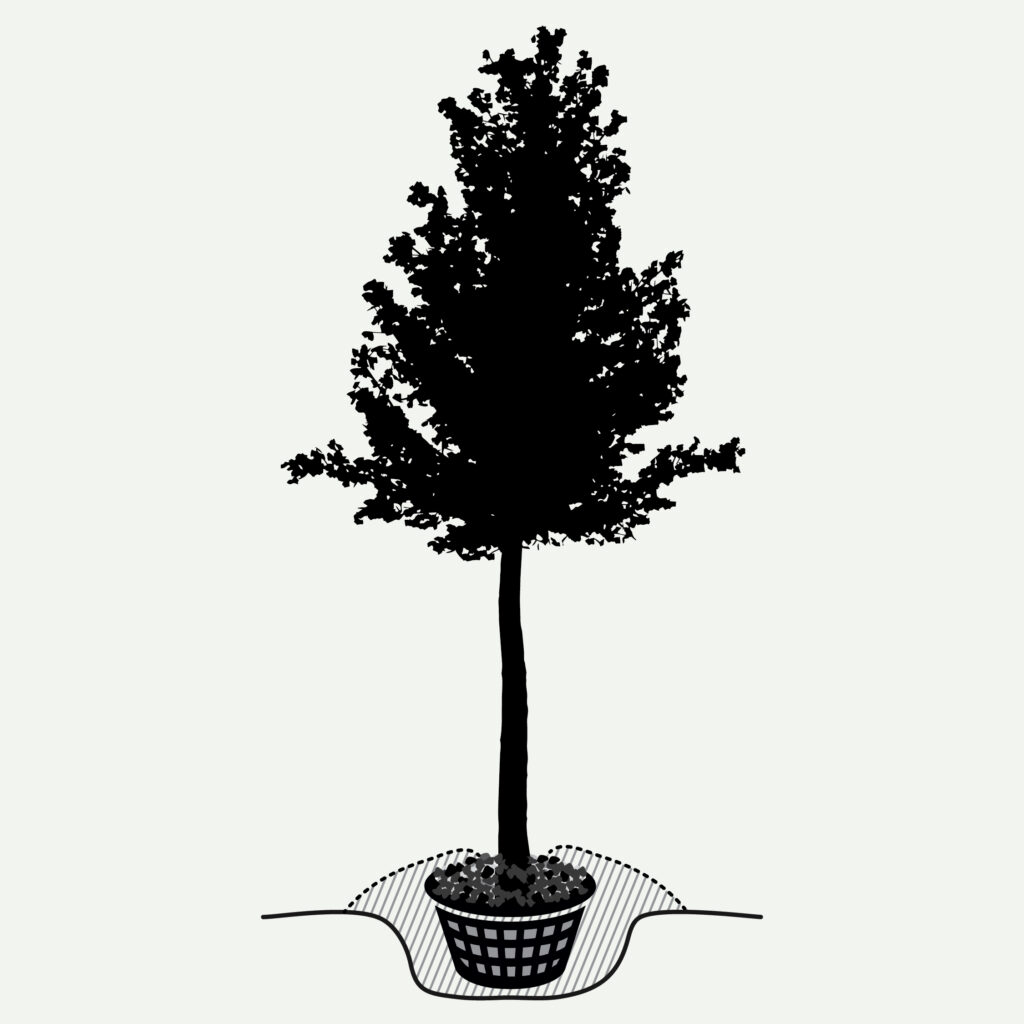
Dig a wide, shallow hole.
Mix:
1/3 topsoil
1/3 pine soil conditioner
1/3 existing soil
Place a thin layer of soil mix in the bottom of the hole.
Position the plant so the top of the root ball sits slightly above ground level.
Backfill gradually, watering as you go to remove air pockets.
Apply 2–3 inches of mulch, keeping it a few inches away from the trunk.
Clay holds moisture — avoid overwatering.
Sandy Soil
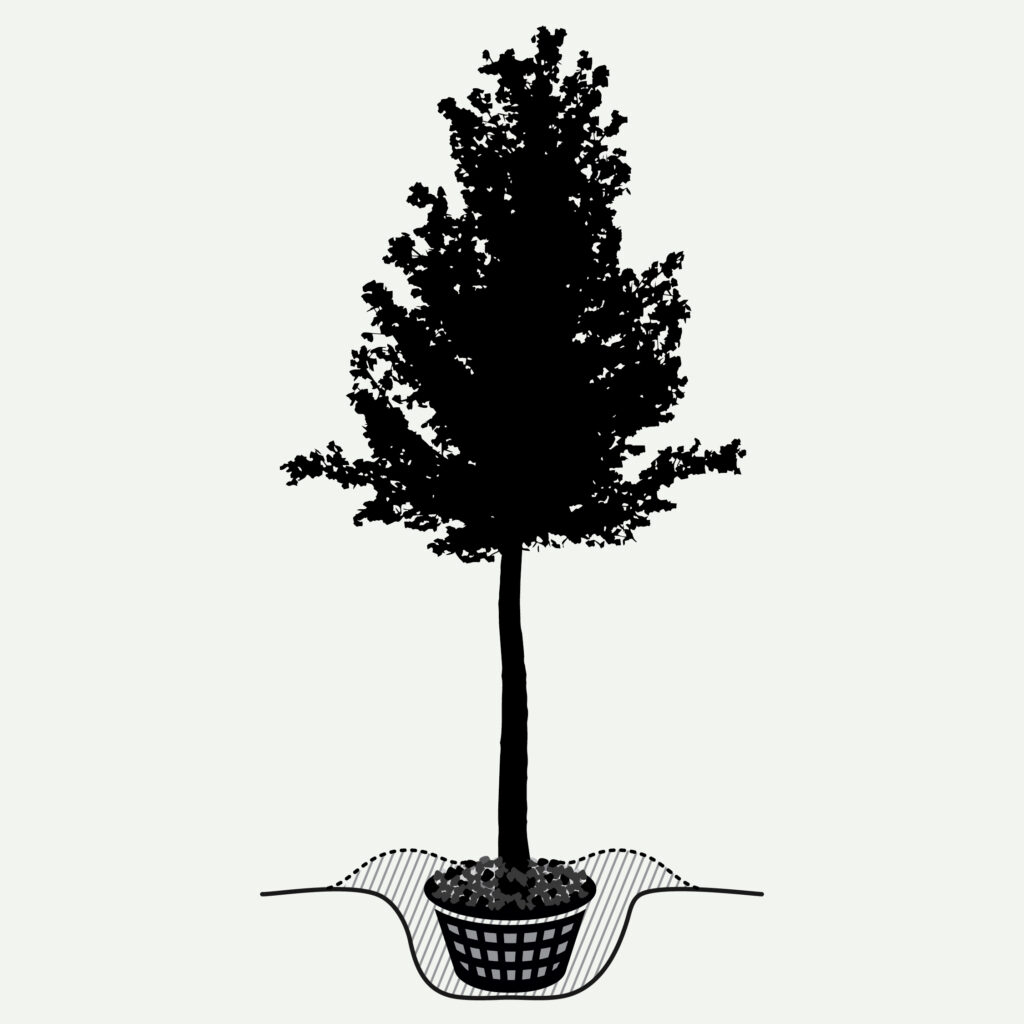
Dig a wide hole as deep as the root mass.
Mix:
1/3 Canadian peat
1/3 topsoil
1/3 existing soil
Position the plant at ground level with the top of the root ball visible.
Water during backfill to prevent dry pockets.
Apply 2–3 inches of mulch, keeping it away from the trunk.
Sandy soil dries quickly — monitor moisture often and water deeply.
Topsoil
Dig a wide hole as deep as the root mass.
Mix 1/3 pine soil conditioner with existing soil.
Place a thin layer of soil mix in the bottom of the hole.
Position the plant at ground level with the top of the root ball visible.
Backfill gradually and water to prevent air pockets.
Apply 2–3 inches of mulch, keeping it away from the trunk.
Watering & Plant Heath
Most plant problems are caused by improper watering. Water needs vary depending on soil type, weather, and plant size.
Watering Newly Planted Trees & Shrubs
Check moisture several inches below the surface — soil should be damp, not soggy.
Spring & Fall: Water deeply once per week (unless rainfall exceeds 1”).
Summer (June–August): Water deeply twice per week for new plantings.
Monitor closely during drought conditions.
Best Watering Methods
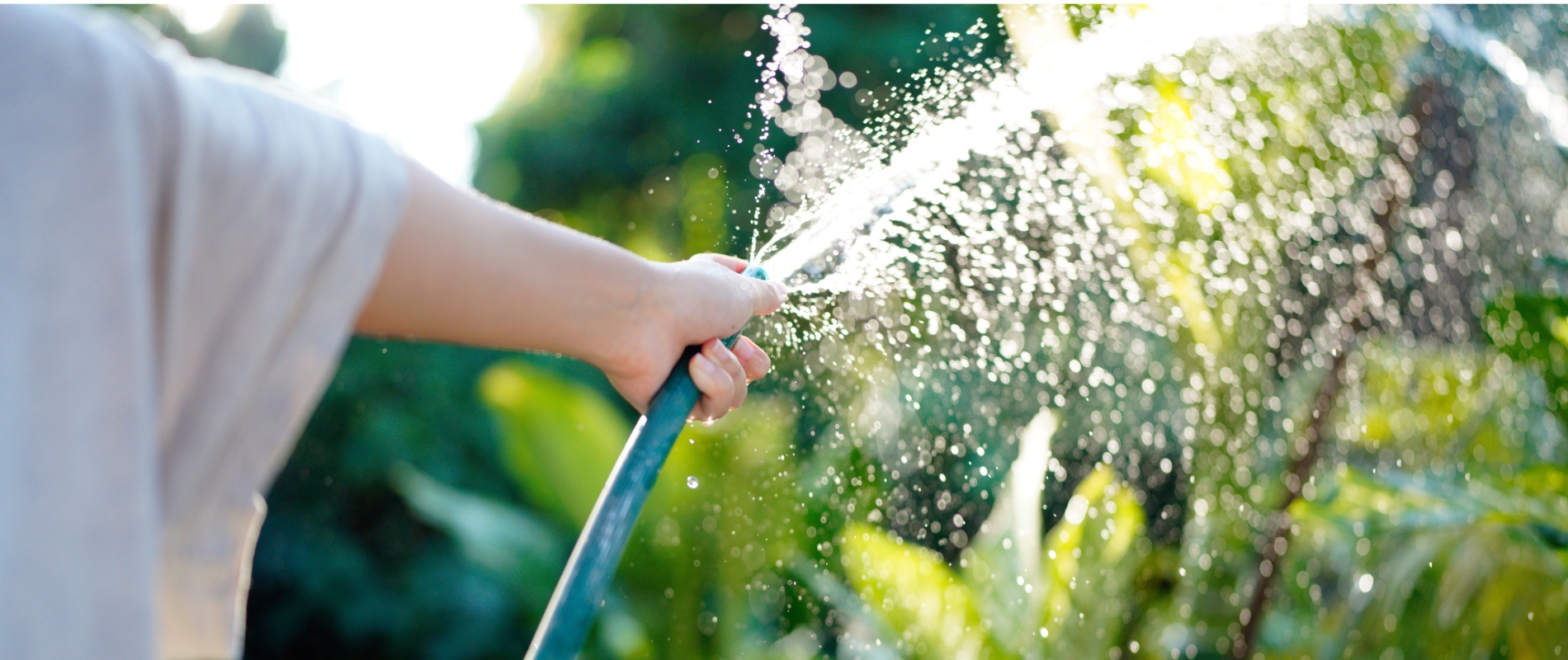
Let a hose run slowly at the base of the plant
Use a soaker hose for deep, even watering
Important Exceptions
Perennials, annuals, groundcovers, and container plants need more frequent watering — sometimes daily in hot weather.
Evergreens require less frequent watering than deciduous plants, but they must be watered deeply before winter to prevent dehydration.
Acid-Loving Plants & Evergreens
For evergreens, broadleaf evergreens, and acid-loving plants:
Mix Pine Soil Conditioner and Canadian Peat into the soil at planting
Maintain acidity with seasonal Holly-tone® applications
Need Help? Not sure what soil type you have or how often to water? Our team is always happy to help you choose the right products and set your plants up for success.